Code got cheap. Your org didn't.
Hands-on enablement workshops and transformation support for engineering leaders.

I keep seeing the same pattern. CTOs roll out coding agent licenses, but productivity barely moves. Teams experiment a bit, fall back to old habits, and nothing changes.
It's not that people avoid AI. Full resistance is almost gone. But there's still a massive gap between using coding agents and actually adopting agentic engineering.
Knowing that coding agents exist and changing how 30, 100 or 500 engineers work are two completely different problems. That's the gap I work in. And the answer isn't a tool list. It's how the organization works.
Two ways I come in
Most teams already have the tools:What they usually lack is either the working method or the operating model around it.
So I offer two programs:
- AI Engineering Workshop, a hands-on format so a team actually learns to engineer effectively with coding agents.
- Organizational Transformation, for when the tools are in but the organization hasn't adopted the new way of working yet.
AI Engineering Workshop
A two-day hands-on format on working with coding agents as a core part of the development workflow.
- LocationOn site. A shorter format is possible if held remotely or in Berlin.
- PreparationEveryone brings a laptop with a coding agent license.
- Audience5 to 50 developers and/or non-developers
- PriceTo be agreed upon individually.
- Day 1: Understand it, then apply itIntroduction to Agentic Engineering: principles, roles, and the target operating model. Then a hands-on greenfield project: everyone builds the same application in their preferred stack, while I do it in front of the room so people can follow the best practices live.
- Day 2: Real-world tasksWe address objections and concerns from Day 1, then implement tasks that reflect daily work. Brownfield strategies, practical patterns, and workflows. The day ends with a full review: every participant presents what they built, what worked, and what they learned. It's usually the most exciting part of the workshop.
Developers who were skeptical, or just never really tried, start using coding agents for their daily work. The trick is to let them use it themselves instead of explaining it, so they feel it. Even the most skeptical developers can hardly argue with software they built themselves, running on their own laptop, done in two hours instead of the two weeks it would normally take.
Organizational Transformation
An on-site engagement to change the engineering operating model around coding agents: diagnose, execute, and measure.
- LocationOn site. Follow-ups can be remote.
- PreparationAccess to people and the current way of working.
- AudienceEngineering leadership, and the teams around them.
- PriceTo be agreed upon individually.
- ListenI talk to your people and look at the current process. How coding agents are really used across teams, where communication breaks, where knowledge doesn't move, and which problems people have stopped putting on the table.
- Redesign the operating modelI come back with what needs to change: workflows, ownership, quality gates, review, knowledge flow, team habits and where agents should take over work. Concrete decisions, not a maturity model.
- Turn it into a 90-day planTogether with leadership we decide what changes first, who owns it, how we define success and how to measure it and which experiments start immediately.
- Stay involvedEvery two weeks we check where we stand, unblock what is stuck, and adjust the plan based on how it actually goes.
A concrete AI-native engineering operating model, with clear changes to workflows, ownership, quality, team habits and agent usage, plus a 90-day execution plan with measurable success criteria.
I've done this from the inside
Over 30 workshops this year, on real codebases, with real backlogs and real resistance. Teams at CTS EVENTIM, bonprix, IONOS, Haufe, Thomann, Trusted Shops, Enpal, Witt Weiden, Russmedia, Valantic and many others.
Together with alphalist, I have hosted two CTO Bootcamps. 40 CTOs each, facing the same organizational challenges. A third one is coming later this year in Hamburg. In November I'm speaking at Øredev in Malmö.
Almost daily, I publish what I'm learning from real-world agentic engineering work on LinkedIn. And with #OneShotShop I maintain a public comparison of coding agents and harnesses under the same conditions.
About me
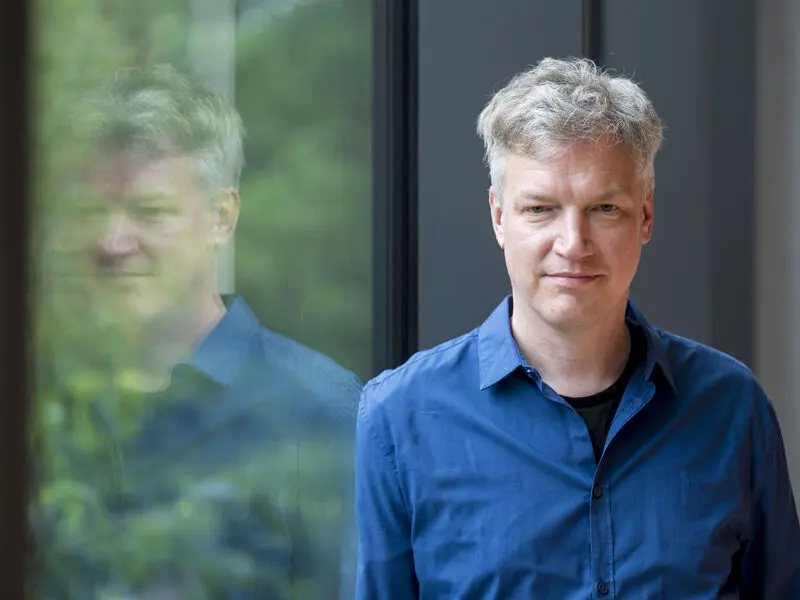
Hi, I’m Fabian. For the past 20 years, I’ve worked as a CTO and technical founder, building teams, scaling engineering organizations, and turning ideas into working products.
Agentic Engineering Coach (2025–Present)
This is the work I do now. Engineering organizations, coding agents, and the operating model around them.
Managing Director Customer Success at SCAYLE (2025)
As SCAYLE's MD I was responsible for the entire customer journey when a project started. That included partner enablement, 3rd party integrations, professional services and key account management. I left the company early because this simply wasn't the right fit for me.
CTO & Co-Founder at ROQ Technology (2020–2024)
I co-founded ROQ in 2020 with the goal of accelerating SaaS development by offering essential building blocks as modular React components, like user management, chat, file handling, and roles & permissions.
Consultant at Metro AG (2019–2020)
Metro has chosen Spryker as its e-commerce technology to replatform their shops for retailers in Russia and Romania. I temporarily joined Metro's tech division called Metronom to strengthen this project. My mission was to build and train the internal team to replace the agency who did the initial implementation.
CTO and Co-Founder of Spryker (2015–2018)
The Spryker Commerce OS is an e-commerce platform for ambitious B2C and B2B projects. As technical co-founder my job was to lead the initial core team and to specify the architecture and functionality of the software. Spryker empowers companies like ALDI, Siemens or Hilti, and is currently a Visionary in Gartner's 2025 Magic Quadrant.
CTO at Project A (2011–2014)
As Project A's CTO my job was to roll out multiple ventures as Contorion, Tirendo or Nu3. I was responsible for the entire technology stack, recruitment of the team and establishment of agile processes. Usually my job was done when we hired and trained a permanent CTO for each venture.
Global CTO at Rocket Internet (2009–2011)
As Rocket's CTO my job was to implement an e-commerce framework called "Alice&Bob", drawn from the Zalando playbook. I was responsible for the technical execution of the global rollout of Zalando-like fashion shops like Dafiti, Jabong and Zalora. The underlying Alice&Bob framework was also adopted by other Rocket ventures like HelloFresh and Westwing.
Let's talk
Leave your email. I'll write back with a calendar link, so we can check if/how I can support your organization.
Got it. I'll write back asap.
Alternatively, you can contact me on LinkedIn: